SCONUL Autumn Conference 2026: Leading Libraries in a Changing World: Value, Trust and Transformation
SCONUL's Autumn Conference, Leading Libraries in a Changing World: Value, Trust and Transformation, took place on 13 November at The Studio, Birmingham.
Bringing over 100 SCONUL members together, the conference offered a valuable space to step back from immediate operational pressures, engage with evidence and emerging practice, learn from colleagues and consider how libraries can shape—and not simply respond to—the changes ahead.
Keynote speeches
It's a temptation to get it to do the work: Student experiences of GenAI and the implications for libraries and information services
Dr Stephen Gow, Associate Member of the Department of Education, University of York and former Leverhulme Fellow, Edinburgh Napier University
Generative AI is part of the everyday reality of university life. Students are using AI tools to explore ideas, make sense of complex material, support their writing, organise their studies and navigate a demanding academic environment. But their experiences are far from uniform: alongside confidence and experimentation, there is uncertainty about what constitutes appropriate use, how far AI outputs can be trusted, and where institutional expectations and boundaries lie. Understanding what students are actually doing with AI - not simply what we assume they are doing - is essential if universities and their libraries are to provide the guidance, skills and support students need to use these technologies critically, confidently and responsibly.
Dr Stephen Gow's presentation, It's a temptation to get it to do the work: Student experiences of GenAI and the implications for libraries and information services, shared new insights into changing student behaviours, reporting on his recent extensive study looking at student experiences of navigating the generative AI landscape in UK higher education.
Media Literacy and Democratic Participation in Evolving Information Environments
Dr Gianfranco Polizzi, Assistant Professor in Digital Media and Communications, Department of Linguistics and Communication, University of Birmingham
Dr Gianfranco Polizzi's presentation, Media Literacy and Democratic Participation in Evolving Information Environments, highlighted persistent gaps in media literacy across the UK population and some of the challenges involved in equipping both children and adults with the skills they need to thrive in a rapidly changing digital society. Reflecting on current opportunities and challenges for media literacy education, he also considered the role that institutions, including libraries, can play in supporting media literacy provision and in fostering critical engagement with information, and he concluded with evidence-based recommendations for future research, policy and practice.
EDI for libraries, have your say
Martina McChrystal, Director of Library Services, University of Glasgow; Dr Sarah Pittaway, Director of Library & Learning Resources, Birmingham City University
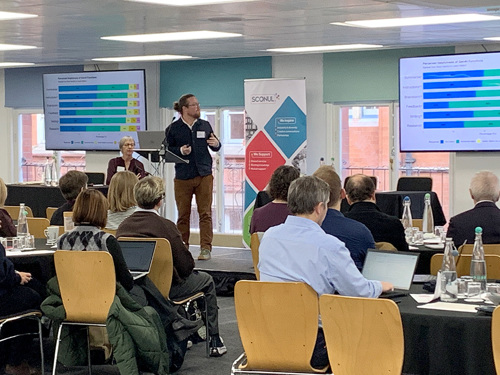
The SCONUL EDI Group Co-chairs gave brief presentation on the group's work, and asked members what matters most to them about EDI
Panel discussions
Doing things differently
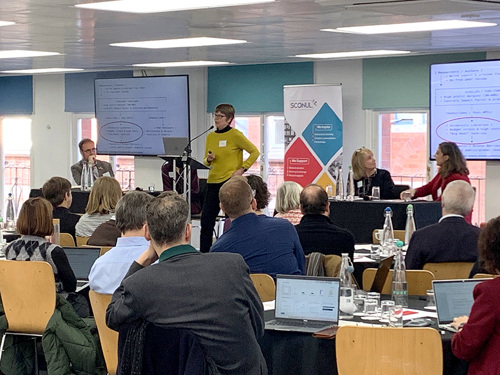
Anna Clements, Director Library Services and University Librarian at University of Sheffield; Justine Rush, Head of Library Services at University of Kent; Dr Eleonora Gandolfi, Associate Director (Research and Innovation)/ UKRN Institutional Lead at University of Surrey; Robin Armstrong Viner, Associate Director: Head of Libraries at Swansea University.
Academic and research libraries are operating in an increasingly challenging financial environment, with rising costs, constrained institutional budgets and growing expectations of what libraries should deliver. But financial pressure also creates an imperative to think differently. This panel brought together library directors who explored how libraries can respond creatively and strategically by rethinking approaches to content and collections, making smarter choices about technology, and considering how teams, roles and skills might evolve.
Doing things differently: moving away from the big deal(s), Anna Clements, University of Sheffield
University of Kent: Four restructures, one evolving way of working, Justine Rush, University of Kent
Doing things differently, Dr Eleonora Gandolfi, University of Surrey
Stronger together: Building a culture of collaboration, Robin Armstrong Viner, Swansea University
Advocacy through storytelling
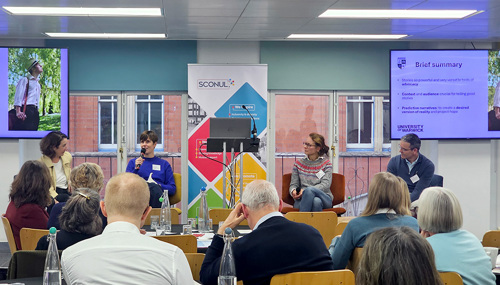
Gary Elliott-Cirigottis, Director of Library and Knowledge Services at The Open University; Libby Homer, Chief Student Experience Officer at Buckinghamshire New University; Professor Stephanie Schnurr, Professor in Sociolinguistics and Director of Postgraduate Research Studies in Applied Linguistics at University of Warwick.
How we talk about libraries matters. At a time when higher education is under significant financial and strategic pressure, demonstrating value is not simply about presenting evidence—it is about creating compelling narratives that connect the library’s contribution to the priorities of the institution. This panel explores advocacy through three complementary perspectives: positioning the library as a vital knowledge service at the heart of the university; what senior leaders really see, hear and value when they think about their libraries; and how the techniques of storytelling can transform evidence, impact and expertise into narratives that resonate.
From library services to strategic knowledge infrastructure, Gary Elliott-Cirigottis, The Open University
Storytelling techniques as a tool for advocacy, Professor Stephanie Schnurr, University of Warwick
Parallel sessions
Delegates had the opportunity to join one of the following three sessions:
- Increasing visibility and impact: the experience of the Jisc Digital transformation library lens programme and call for a new library cohort
Participants heard directly from libraries that took part in the Jisc Digital transformation library lens pilot research programme as they shared how they increased their visibility, influence and impact within different institutional contexts and challenges. Through practical examples, speakers discussed how they have used the library lens resource to address institution-wide priorities, from shaping strategy, to strengthening digital and AI capability, and embedding change across the library and the institution. - Collective Collections: An Alternative to the Big Deal?
This workshop shared emerging work from the RLUK Collective Collections subgroup and invited participants to explore whether a collective collection model can offer an alternative to the Big Deal. They considered what a more flexible, evidence-led approach to collective access could look like and whether it could give institutions greater choice over how they invest limited resources. - SCONUL Succession Planning Report, next steps
Following the recent SCONUL succession planning survey, this session examined the key findings, explored what they tell us about current and future workforce challenges, and considered priorities for action. Through discussion and shared experiences, participants helped shape the next steps in supporting talent development, leadership capacity, and succession planning across the sector.
Feedback from delegates
Highly relevant to current discussions and focus. I'll definitely be following up and exploring the published research, sharing it at my institution and reflecting on actions needed/how I can take forward.
Loved this keynote. Lots of insights and was an effective broader lens on library/HE developments.
Really insightful authentic sessions from leaders who are trying to do things differently.
Thought the content was excellent and loved having speakers who are not just from libraries.
Always valuable and informative. The SCONUL conference events are so useful in helping with planning, thinking and in understanding the sector level shared experience. I can't recommend them highly enough.
Great value - great lunch - great speakers - great organisers. Creative and collective joy!
This event was supported by:


Sponsors:


