SCONUL Spring Conference 2026
SCONUL's Spring Conference, Openness Under Pressure: Strategic leadership for libraries in an era of disruption, took place on 1 May at the Royal College of Physicians, London.
Bringing over 100 SCONUL members together, the conference explored the library community’s commitment to openness and how it can be maintained in the face of countervailing pressures including growing economic and political nationalism and cybersecurity concerns. Across panel discussions, peer exchanges and lightening talks, attendees considered how to move beyond reactive adaptation toward intentional leadership: shaping digital futures that are equitable, resilient and aligned with institutional priorities. Delegates also had the opportunity to consider how to prepare for a future shaped by Gen Z and Alpha learners.
Keynote speech
Can we handle the truth?
Professor Karen Stanton, Vice-Chancellor, University of the Arts London
Professor Karen Stanton shared her reflections on the challenges and opportunities facing UK HE in her presentation, Can we handle the truth? Strategic leadership for libraries in an era of disruption. As a hugely experienced HE leader and a qualified librarian, she was uniquely placed to offer our delegates insights and advice on navigating through this period of intense change.
Panel discussions
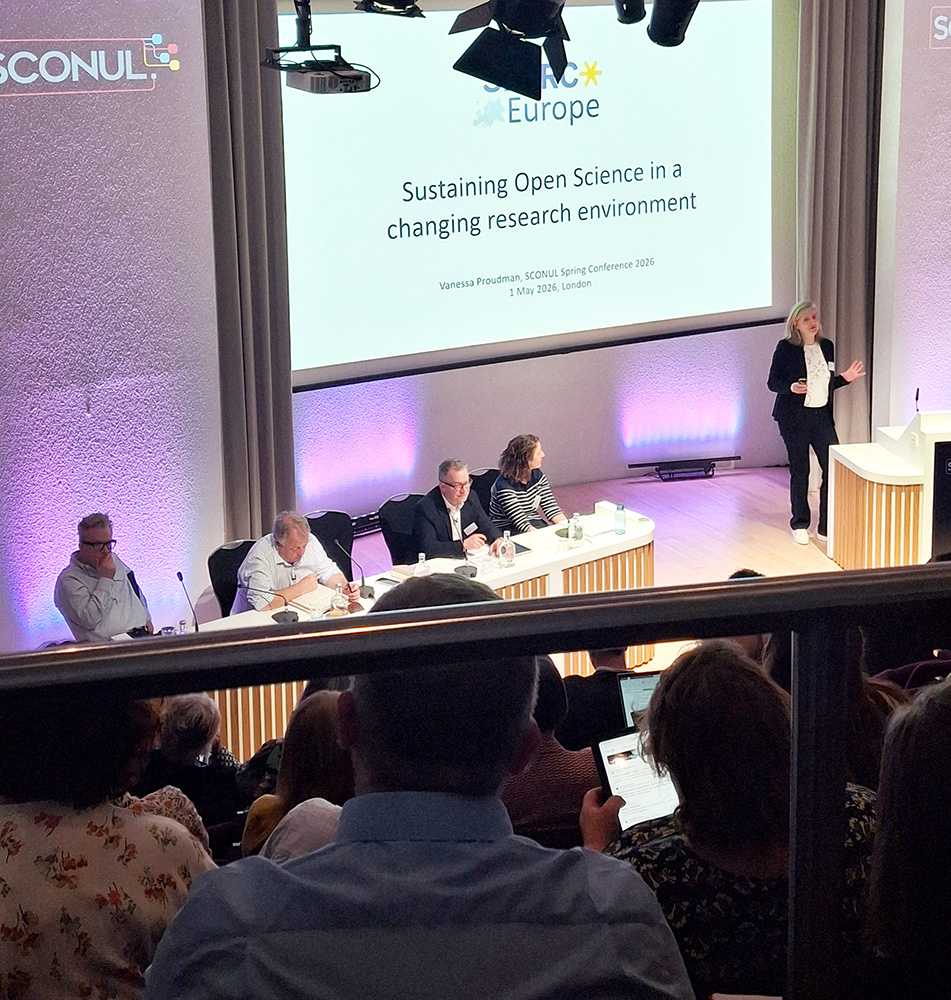
Defending Openness in a Fragmenting World
Professor Theo Papaioannou, Professor of Politics, Innovation and Development, Open University; Vanessa Proudman, Director, SPARC Europe; Nick Hillman OBE, Director, HEPI; Andrew Barker, Director of Library Services & Learning Development, Lancaster University.
The library community has a commitment to openness embedded in its DNA - fostering access to knowledge for all. However, there are countervailing pressures within our society including growing economic and political nationalism; cybersecurity concerns around open systems; financial pressures on institutions to prioritise retaining IP over open sharing; on-going academic scepticism of OA publishing; and concerns over LLMs capturing and commercialising research which is openly shared.
This session discussed these challenges and our expert panellists, coming from a useful mix of backgrounds, offered their perspectives on these issues and how libraries can push through.
Defending Openness in a Fragmenting World panel presentations:
The next generation of students: How prepared are libraries for a future shaped by Gen Z and Alpha learners?
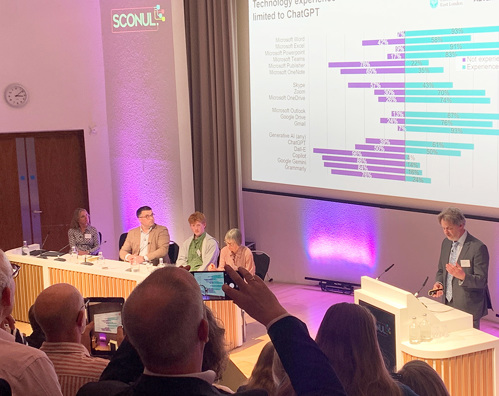
Jonathan Neves, Head of Business Intelligence & Surveys, Advance HE; Dr George Hulene, Deputy Dean of the College of Business and Law, Coventry University; Lesley Castens, Director of Education Services, University of Plymouth; Duncan Calvert, President, Glasgow University Students’ Representative Council.
The next generation of students (Gen Z, born 1995–2009, and Gen Alpha, 2010–2024) are commonly seen as digitally fluent, preferring interactive, personalised, and "bite-sized" learning, and as expecting on-demand, flexible education.
This session offered insights from a panel of experts, who discussed what this will mean for libraries and how our institutions will need to adapt their teaching and support systems to meet the needs of these cohorts.
The next generation of students panel presentations:
Insights from incoming students, Jonathan Neves, Advance HE
Gen Alpha, Dr George Hulene, Coventry University
The next generation of students: a discussion on Gen Z and Gen Alpha Implications for institutions & academic libraries, Lesley Castens, University of Plymouth
The New Student Experience of Libraries, Duncan Calvert, University of Glasgow
Lightning talks
The Collaboration Zone: harnessing our collective power
We heard from four institutions who highlighted new and exciting collaborations taking place across the library community:
- Dr Jessica Gardner, University Librarian and Director of Library Services, Cambridge University Library, introduced the recently formed Libraries Alliance, a new partnership of library bodies from school libraries to academic, from public libraries to independent, from legal deposit libraries to nationals. The Libraries Alliance is working to strengthen and champion libraries of all kinds, and Jessica outlined the group’s remit and goals round the theme of “libraries through life”.
- David Beales, University Librarian, Brunel University of London, gave an update on the progress of the OER Community of Practice for UK & Ireland since its launch in 2025 including a first look at the new Open Textbook Library for UK & Ireland, and opportunities for colleagues to get involved in the work of the community.
- Jane Saunders, Associate Director: Content and Discovery, University of Leeds, and Amy Warner May, Associate Director, Scholarly Resources, The Bodleian Libraries, University of Oxford, introduced the newly created UK Open Bibliographic Metadata Task and Finish Group sponsored by SCONUL's Markets and Technologies Group. The group aims to identify and implement the steps needed to create a more open, dynamic and cost-effective metadata environment for the benefit of libraries and their users. Amy and Jane talked about the advantages of Open Metadata and outlined the 3 key areas of work: open policies and licensing for metadata; BIBFRAME as a vehicle for delivering a linked open metadata environment; technical solutions and infrastructure required to sustain a UK open bibliographic metadata environment.
Library Exchange Labs
SCONUL introduced a new initiative that allowed members to come together, network and share challenges, opportunities and experiences or simply to connect with people with similar priorities via a set of three library surgeries. Each session had a facilitator to guide the group discussions.
We held discussions on:
- Digital transformation and managing legacy technology
The kinds of questions members explored included: given tight budgets, how can we utilise our existing technologies in new ways? Are there collaborative approaches to help us manage the transformation process? How can we get involved in priority projects for our institutions? And are there technologies we may be able to dispense with as a result of technological shifts? - Space planning
In addition to the questions of renovation and redevelopment of libraries, the kinds of questions members explored included navigating the shifting landscape as institutions consolidate buildings and estates; harnessing our students’ love for our spaces for library advocacy; meet the sustainability challenge and the opportunities and challenges of co-location and partnerships? - Squaring the circle on meeting institutional priorities with a shrinking budget
Members considered exploring new approaches to team structures as well as what it means to lead with authenticity both with institutional leadership teams and library teams given the necessity of changing the nature of the service that we can offer, as well as how we can we support staff navigate the change process.
This event was supported by:


Sponsors:


